
The world of mobile connectivity is evolving rapidly, and 5G eSIM technology is at the forefront of this transformation. Unlike traditional SIM cards, an eSIM 5G is embedded directly into devices, allowing smartphones, tablets, and IoT devices to connect seamlessly to 5G networks without physical SIM swapping. This innovation is not just about convenience—it enables faster data speeds, lower latency, and reliable global connectivity.
From the bustling cities of the USA to the tech hubs of Europe and the rapidly growing digital markets of Asia, 5G eSIM is redefining how devices communicate. Enterprises can deploy connected IoT devices at scale, while consumers enjoy instant carrier switching and enhanced network performance.
So why is 5G eSIM transforming mobile connectivity worldwide? Simply put, it makes devices smarter, networks more flexible, and global communication frictionless. In this complete guide, we’ll explore how 5G eSIM technology works, its benefits, supported devices, and its impact on the future of connectivity.
In This Article
ToggleUnderstanding eSIM: The Future of SIM Cards
As smartphones, tablets, and IoT devices become more advanced, the traditional physical SIM card is gradually being replaced by the more versatile eSIM 5G. But what exactly is an eSIM, and why is it considered the future of mobile connectivity? Understanding its capabilities is crucial for anyone looking to leverage the benefits of 5G eSIM technology across devices and regions.
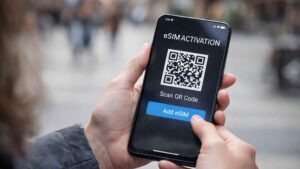
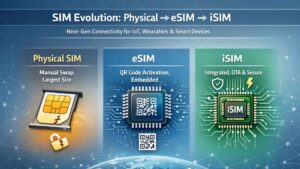
Unlike standard SIM cards that require physical swapping, an embedded SIM (eSIM) is built directly into the device. This allows users to activate a cellular plan digitally, without removing or replacing a card. Whether it’s the latest iPhone, a Samsung Galaxy phone, or LTE-enabled tablets, simless devices powered by eSIMs provide greater flexibility, faster setup, and global connectivity.
With eSIM technology, switching between carriers or plans has never been easier. Multiple profiles can be stored on a single device, allowing seamless transitions when traveling internationally or testing different networks. This convenience is particularly valuable for IoT devices, which often require connectivity in remote locations without manual intervention.
What is an eSIM?
An eSIM, or embedded SIM, is a programmable chip built into a device that replaces the need for a physical SIM card. It enables users to activate and manage mobile plans digitally. Examples include iPhone 14/15 models, Samsung Galaxy S23/S24, and LTE-enabled tablets. By eliminating the need for a physical card, eSIM simplifies connectivity for both consumers and IoT devices.
Advantages of eSIM Technology
- No physical card swapping required, making carrier changes instant and effortless.
- Multiple carrier profiles on one device, ideal for travelers and enterprise IoT deployments.
- Easier global travel connectivity, ensuring seamless network access across countries.
- Future-ready for new devices and networks, enabling upgrades without hardware changes.
- Improved device design, reducing internal space requirements and supporting more compact devices.
eSIM Adoption Around the World
eSIM adoption is growing rapidly across major regions. In the USA, carriers now provide 5G eSIM support for smartphones and tablets. Europe leads in offering international travel plans with seamless eSIM activation. Meanwhile, Asia and the Middle East are increasingly integrating eSIM into smart devices, ensuring uninterrupted connectivity for both consumers and enterprises.
How 5G Works with eSIM
With the rise of next-generation mobile networks, understanding how 5G eSIM technology works is essential for both consumers and enterprises. The combination of eSIM 5G and advanced 5G networks allows devices to connect faster, more reliably, and globally without physical SIM cards. From smartphones and tablets to IoT devices and routers, this integration is transforming connectivity by making it seamless, scalable, and future-ready.
5G Network Basics
5G is the latest cellular network technology, offering unprecedented speed, bandwidth, and ultra-low latency compared to 4G. These improvements are critical for real-time applications, from smart home devices to industrial IoT sensors. By delivering higher data throughput and supporting more connected devices simultaneously, 5G forms the backbone for the next generation of connected gadgets.
eSIM and 5G Integration
An eSIM embedded in a device allows instant connection to 5G networks without physically inserting a SIM card. Using zero-touch provisioning and remote provisioning, carriers can activate or switch plans digitally, making global connectivity effortless. This approach is particularly valuable for travelers, IoT deployments, and businesses managing multiple devices across regions like USA, Europe, and Asia.
Benefits of 5G + eSIM Integration
Integrating eSIM with 5G networks delivers several advantages:
- Low latency for real-time responsiveness in smart devices.
- High-speed connectivity for faster downloads and uploads.
- Scalable device deployment for enterprises and IoT applications.
This combination ensures devices are future-ready, able to adapt to new services and global network changes seamlessly.
“With 5G eSIM, devices can connect instantly, switch carriers digitally, and scale effortlessly across global networks, making them future-ready.”
Key Benefits of 5G eSIM Technology
The combination of 5G networks and eSIM technology is revolutionizing how devices communicate. By embedding a SIM directly into devices and leveraging ultra-fast 5G networks, users experience faster data transfer, lower latency, and seamless connectivity. These advantages are not only important for everyday smartphone use but are also critical for enterprises deploying IoT devices, industrial systems, and healthcare equipment.
Faster Data Transfer & Low Latency
One of the most significant benefits of 5G eSIM technology is its ability to enable near-instantaneous data transfer. Low latency ensures that devices respond almost in real-time, which is crucial for applications like smart home automation, online gaming, and telemedicine. For IoT devices, sensors and machines can communicate without delays, improving efficiency and decision-making.
Increased Device Capacity
5G networks combined with eSIMs allow billions of devices to connect simultaneously without network congestion. This is essential for IoT ecosystems, where smart sensors, connected vehicles, and enterprise routers need reliable bandwidth. Device connectivity is scalable and future-ready with IoT eSIM solutions.
Forward Compatibility & Future-Proofing
Another advantage of 5G eSIM technology is its forward compatibility. Devices equipped with eSIMs are ready to adapt to new services and network innovations without requiring hardware changes. This makes them ideal for emerging applications such as smart cars, industrial IoT deployments, and healthcare devices that demand precision and reliability.
“5G eSIM technology ensures faster speeds, low latency, and massive device connectivity, making it essential for IoT devices, smart cars, and next-generation healthcare applications.”
Devices That Support 5G eSIM
The adoption of 5G eSIM technology is growing rapidly, and today, a wide range of devices are compatible. From smartphones and tablets to routers and IoT devices, eSIM-enabled devices allow users to connect to 5G networks seamlessly without physical SIM cards.
Smartphones
Many of the latest smartphones now support 5G eSIM, including Apple iPhone models, Samsung Galaxy series, and Google Pixel phones. These devices allow users to switch carriers digitally, manage multiple plans on a single device, and enjoy high-speed 5G connectivity anywhere compatible networks are available.
Tablets & Laptops
Beyond smartphones, tablets and laptops are increasingly eSIM-compatible. Popular examples include iPads with cellular support, Surface Pro LTE, and other LTE-enabled laptops. These devices benefit from instant activation of 5G networks, making them ideal for remote work, travel, and IoT applications that require constant connectivity.
Routers & IoT Devices
Enterprise routers, IoT sensors, and wearables are also integrating 5G eSIM technology. These devices can connect to cellular networks without physical SIM management, allowing businesses to deploy IoT fleets efficiently. In Europe, most carriers now offer 5G eSIM plans, enabling global connectivity for enterprises and consumers alike.
“5G eSIM devices, from smartphones to IoT sensors, enable seamless network access without physical SIM cards, supporting fast and reliable connectivity worldwide.”
5G eSIM vs Physical SIM Cards
As 5G networks expand globally, understanding the difference between traditional SIM cards and 5G eSIM technology is essential.
| Feature | Physical SIM | eSIM (5G) |
|---|---|---|
| Switching | Manual | Instant |
| Device Compatibility | Limited | Wide |
| Future-Proof | No | Yes |
| Security | Standard | Enhanced |
| Space in Device | Large | Tiny |
Unlike traditional SIMs that require manual swapping, eSIMs allow instant carrier changes and multi-profile management. They are compatible with a wider range of devices—from smartphones and tablets to IoT sensors—and take up minimal space inside devices.
Why eSIM is better for future 5G devices? It offers faster setup, enhanced security, and future-proof connectivity, ensuring devices remain compatible with evolving 5G networks worldwide.
“eSIMs provide instant activation, multi-network support, and enhanced security, making them ideal for future 5G devices.”
Real-World Use Cases of 5G eSIM
The adoption of 5G eSIM technology is not limited to smartphones—it is transforming connectivity across a wide range of applications.
IoT Devices
For the Internet of Things (IoT), 5G eSIM IoT provides seamless connectivity for devices like smart home systems, industrial sensors, and logistics trackers. Sensors in factories can transmit real-time data without manual SIM management, while smart home devices stay connected across regions.
Enterprise & Industry
Businesses benefit significantly from 5G eSIM solutions when deploying large-scale device fleets. Enterprise routers, automation systems, and industrial machinery can connect instantly to cellular networks without physical SIM swaps. This reduces setup time, enhances enterprise connectivity, and allows global operations to function efficiently across the USA, Europe, and Asia.
Consumers
For everyday consumers, simless devices powered by 5G eSIM networks make life simpler and more mobile-friendly. Smartphones, wearables, and travel-ready devices can switch carriers digitally, manage multiple profiles, and maintain fast 5G connectivity while traveling internationally.
“From IoT sensors to smartphones, 5G eSIM technology enables instant connectivity, scalable device deployment, and seamless carrier switching worldwide.”
Future of 5G eSIM Technology
As 5G networks continue to expand, the future of 5G eSIM technology looks increasingly promising. With the ability to connect devices digitally and globally without physical SIM cards, eSIMs are set to redefine connectivity for consumers and enterprises alike.
Growth Trends & Forecast
Industry analysts predict rapid adoption of 5G eSIMs over the next few years. Major markets in the USA, Europe, and Asia are leading the way, with carriers offering comprehensive support for smartphones, tablets, and IoT devices. Market leaders are focusing on integrating eSIMs in next-generation devices to simplify activation, reduce setup time, and support multi-network functionality.
Impact on Mobile Carriers & Enterprises
For mobile carriers and enterprises, 5G eSIM technology reduces operational friction. Remote provisioning allows carriers to manage subscriptions digitally, while enterprises can deploy large fleets of connected devices without physical SIM handling. This simplifies management, cuts costs, and ensures devices remain consistently connected across regions like Europe, USA, and Asia.
Upcoming Innovations
Looking ahead, 5G eSIMs are expected to integrate with AI-driven solutions, autonomous vehicles, and smart city infrastructure. These innovations will require ultra-low latency and high-speed connectivity, making eSIM-enabled devices the backbone of next-generation networks.
“The future of 5G eSIM technology promises global connectivity, enterprise-ready deployment, and innovations like AI integration and smart cities, making devices ready for the next generation of networks.”
Conclusion
5G eSIM technology is redefining how devices connect in today’s fast-paced digital world. With faster data speeds, low latency, and the ability to support billions of IoT devices, eSIMs offer unmatched flexibility and future-proof connectivity. From smartphones and tablets to enterprise routers and smart IoT devices, simless connectivity ensures seamless global communication across regions like USA, Europe, and Asia.
For consumers and businesses alike, adopting 5G eSIMs means easier carrier switching, simplified device management, and scalable deployment for connected devices. To fully leverage these benefits, check whether your devices are compatible with 5G eSIM technology and explore the network options that best fit your needs.