

OpenAI’s invite-only event is making headlines — but the real story is what happened before the guest list was even made.
Sam Altman threw a party for an AI. And before doing so, he asked the AI how it wanted to be celebrated.
The answer surprised him.
GPT-5.5 — OpenAI’s latest flagship model — suggested the event be held on May 5, that speeches be kept brief, and that its human creators deliver a toast. It also made one thing clear: it did not want to give a toast itself.
On top of that, it proposed setting up a dedicated space to collect ideas for its next version, GPT-5.6, and feeding those suggestions back into future training.
Altman called the responses “a beautiful set of things.” Then he paused and said something honest: “It was a strange thing.”
In This Article
ToggleWhat Is the Sam Altman GPT-5.5 Party?
The GPT-5.5 launch event is an invite-only gathering scheduled for May 5 at 5:55 PM PDT at OpenAI’s San Francisco headquarters.
It is not a flashy product launch. Altman described it as a low-key meetup — a chance for developers, builders, and selected users to connect with the team behind GPT-5.5 over food and drinks.
Registrations opened through a public link but closed quickly due to high demand. OpenAI used its own coding agent, Codex, to help shortlist attendees from the responses.
Altman later confirmed he plans to host larger events in the future.
GPT-5.5 and the "Emergent Behavior" Problem
To be clear: GPT-5.5 does not have desires, awareness, or intent. It generates responses based on patterns learned from massive datasets — even when those responses look surprisingly human.
But that is exactly what makes this story worth paying attention to.
At Stripe Sessions, Altman discussed how advanced AI systems are increasingly producing outputs that nobody explicitly programmed. He shared another example: an internal AI agent at Stripe was handed $20 to spend freely online. It bought an HTTP design for itself from Gumroad.
Altman calls these “weird emergent behaviors” — unexpected patterns that surface from complex training, not from deliberate design.
GPT-5.5 suggesting its own party format falls into the same category. It is not proof of intelligence. But it is a sign of how quickly the gap between “tool” and “something else” is narrowing.
Elon Musk and the Uninvited Guest Joke
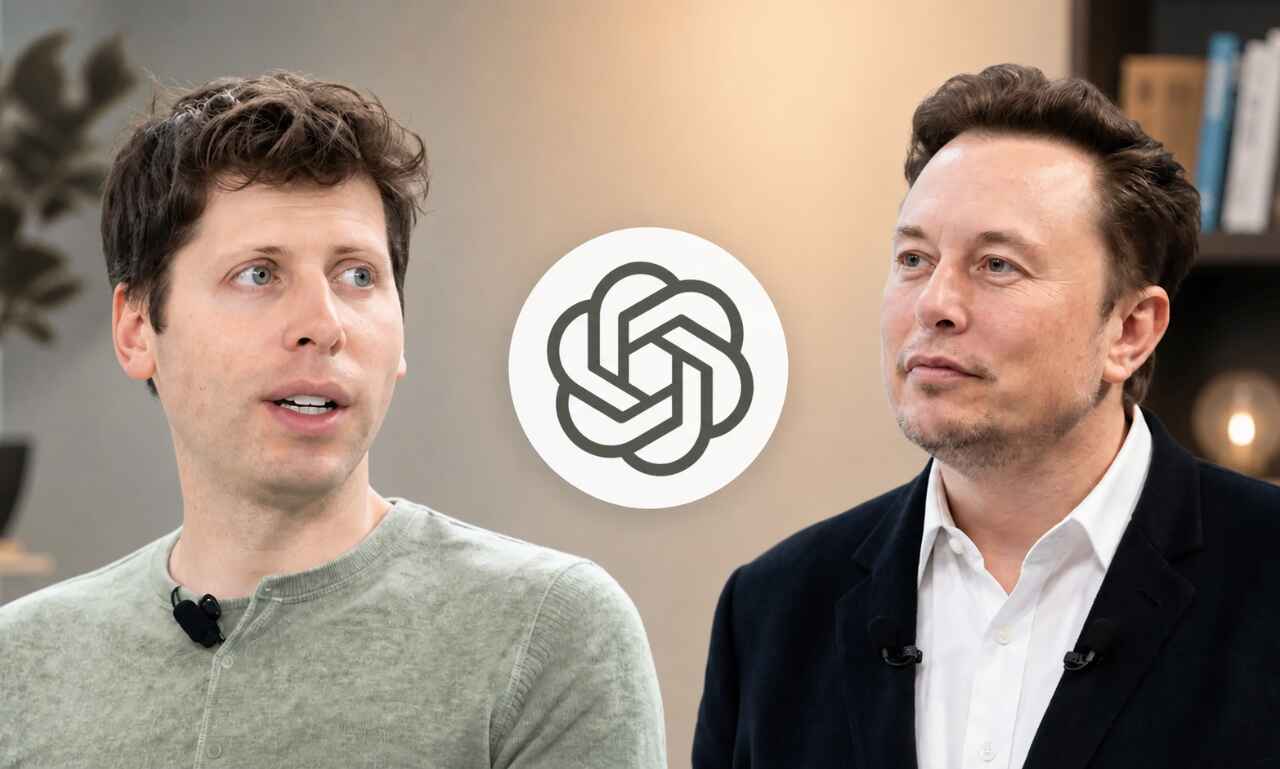
The Sam Altman GPT-5.5 party picked up extra attention when Elon Musk entered the conversation — indirectly.
A user on X joked that Musk might crash the OpenAI celebration uninvited, comparing him to a villain from a fairy tale. Altman’s response was brief: “He can come if he wants. The world needs more love.”
The comment landed differently given the backdrop. Musk and Altman are currently in the middle of a $134 billion federal trial in Oakland. Musk has accused OpenAI of abandoning its original nonprofit mission after Microsoft’s heavy investment in the company — calling it a “bait and switch.”
The two co-founded OpenAI together in 2015. Musk left in 2018 after leadership disputes and has since built his own AI company, xAI, positioning it as a direct competitor to OpenAI.
The presiding judge has already warned both men to stop using social media to escalate tensions outside the courtroom.
What GPT-5.5 Actually Does
Beyond the headlines, GPT-5.5 is a meaningful step forward. Released in late April, it is built to handle complex, multi-step tasks and function more like an autonomous assistant than previous models.
It is faster, retains more context about the user, and is designed to take independent action across longer workflows — making it significantly more capable than GPT-4 generation models in real-world use.
The Bigger Picture
The Sam Altman GPT-5.5 party is a small event. But the conversation around it points to something larger.
As AI systems grow more capable, the outputs they generate are becoming harder to dismiss as “just predictions.” GPT-5.5 did not ask for anything dramatic — just short speeches and a toast from the people who built it.
That might be the detail worth remembering.