
The wearable technology market is evolving rapidly in 2026. Smartwatches are no longer simple notification devices. They are becoming intelligent health assistants and lifestyle companions. Google and Samsung continue to lead the Android smartwatch ecosystem.
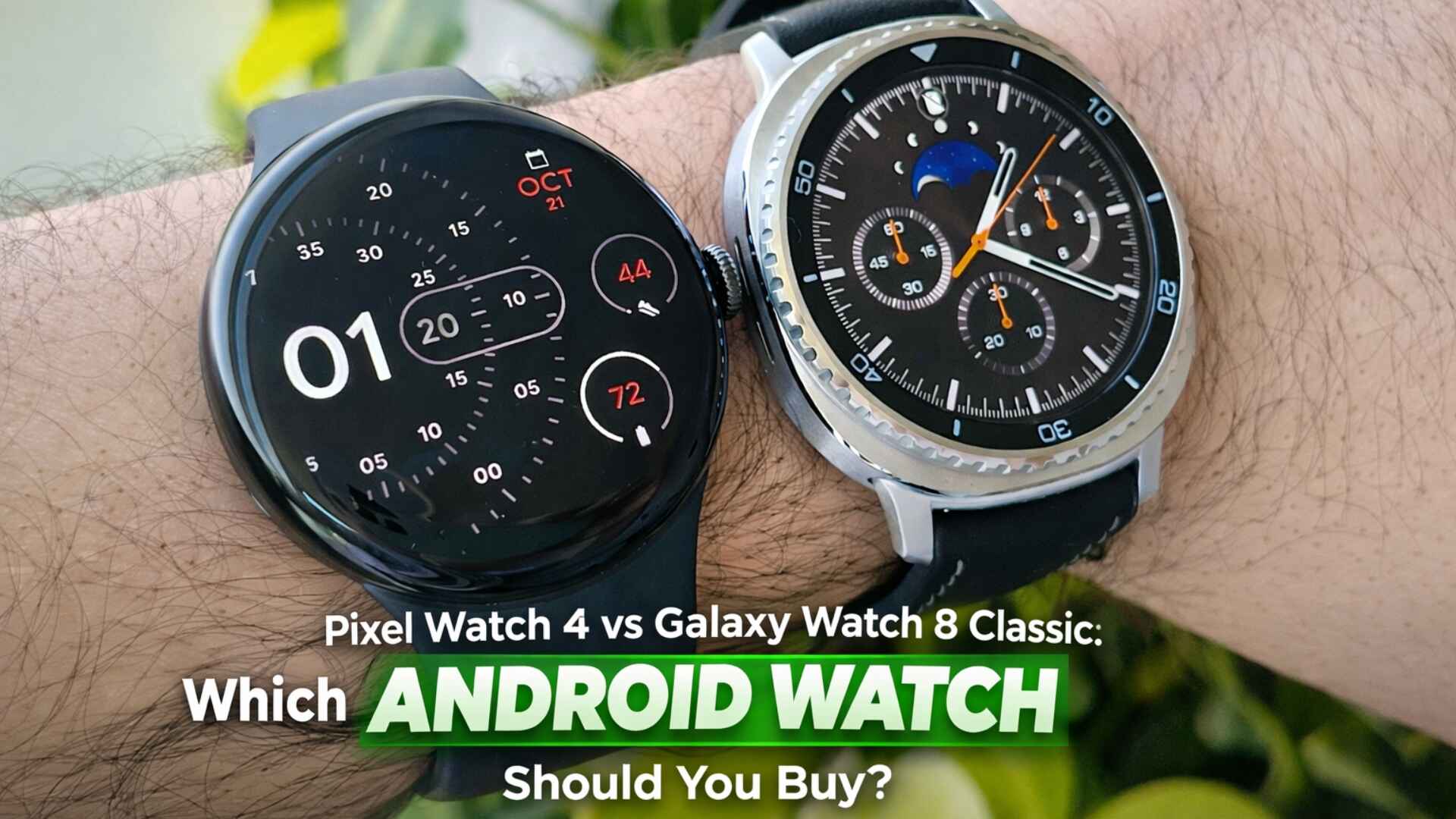
The comparison between Google Pixel Watch 4 and Samsung Galaxy Watch 8 Classic represents two different design philosophies. One focuses on minimalist AI-driven digital intelligence. The other emphasizes traditional mechanical usability combined with advanced sensor engineering.
Both devices are expected to target premium Android users who want long-term wearable performance.
In This Article
ToggleDesign Philosophy and Display Experience
Modern smartwatch design balances comfort, durability, and visual clarity. Samsung follows a classic luxury wristwatch approach. Google prefers lightweight minimalist aesthetics.
The Samsung Galaxy Watch 8 Classic is projected to use a cushion-shaped structural frame, often described as “squircle” geometry. Titanium-based construction may improve shock resistance and durability.
The physical rotating bezel remains the signature feature. It provides precise navigation feedback, especially in challenging environmental conditions.
On the other hand, Pixel Watch 4 continues Google’s smooth glass-integrated design language. The device is expected to feature a refined curved OLED display that blends naturally into the aluminum body.
Display visibility is projected to reach high peak brightness levels suitable for outdoor use.
Key Design Differences
| Feature | Pixel Watch 4 | Galaxy Watch 8 Classic |
|---|---|---|
| Body Material | Recycled Aluminum Concept | Titanium / Stainless Steel |
| Navigation | Touch + Haptic Crown | Physical Rotating Bezel |
| Design Style | Minimalist Modern | Traditional Luxury |
| Durability Focus | Repairable Architecture | Rugged Mechanical Build |
Performance, AI Integration and Connectivity
Smartwatch computing power in 2026 is expected to shift toward neural-assisted local processing.
The Pixel Watch 4 is likely to use advanced lightweight chipset optimization combined with on-device AI models similar to Gemini Nano architecture. By processing more data locally, the system reduces the need for cloud communication and provides better privacy protection
The device may also include emergency connectivity concepts such as satellite-based distress signaling for outdoor safety scenarios.
Samsung Galaxy Watch 8 Classic is projected to use next-generation Exynos wearable silicon designed for thermal efficiency and sustained performance.
Connectivity standards such as Wi-Fi 7 and Bluetooth 5.x family protocols are expected in premium models.
Health Monitoring and Biometric Features
Health technology is becoming the primary selling point of modern wearables.
Both watches aim to provide lifestyle-oriented health insights rather than medical diagnosis.
Health Tracking Capabilities
- ECG style heart rhythm monitoring assistance
- Oxygen saturation trend analysis
- Skin temperature sensing
- Sleep cycle behavior mapping
- Stress response estimation
The Samsung ecosystem may introduce metabolic health indicators such as long-term lifestyle biomarker tracking. However, these features should be considered supportive wellness tools rather than clinical medical equipment.
Google Pixel Watch 4 is expected to focus on AI-driven recovery coaching. Continuous heart rate variability data may help estimate fatigue levels and suggest rest periods.
- ECG style heart rhythm monitoring assistance
Battery Efficiency and Charging Concept
Battery life remains a major engineering challenge in wearable devices.
The Pixel Watch 4 is projected to support fast top-up charging cycles. Users may achieve significant battery recovery during short charging sessions.
- Expected usage endurance: approximately 40–56 hours depending on workload.
Samsung Galaxy Watch 8 Classic prioritizes stable long-duration performance.
- Expected endurance: around 30–40 hours with Always-On Display usage.
Power optimization algorithms are likely to play a major role in extending real-world battery life.
Ecosystem and User Experience
Google’s strategy focuses on AI-assisted lifestyle management.
The Fitbit-Gemini integration may analyze activity patterns, sleep behavior, and stress indicators.
Samsung provides a more hardware-oriented experience with advanced sensor arrays and bezel navigation.
Samsung ecosystem advantages may include wireless PowerShare charging compatibility with Galaxy smartphones.
Conclusion
Choosing between the Pixel Watch 4 and Galaxy Watch 8 Classic ultimately depends on individual priorities and daily usage needs. The Pixel Watch 4 is expected to appeal to users who prefer a lightweight design, fast charging convenience, and AI-assisted health guidance for everyday lifestyle management. Meanwhile, the Galaxy Watch 8 Classic is better suited for users who value traditional mechanical control, rugged premium construction, and advanced biometric sensing capabilities.
The wearable technology landscape in 2026 is likely to focus more on intelligent health assistance and ecosystem connectivity rather than raw hardware dominance. Neither smartwatch is universally superior in every category. The best choice will depend on design preference, comfort, software ecosystem, and long-term usability.